четверг, 6 ноября 2014 г.

Тц Афина Одесса \ Shopping Center Afina Odessa Ч2


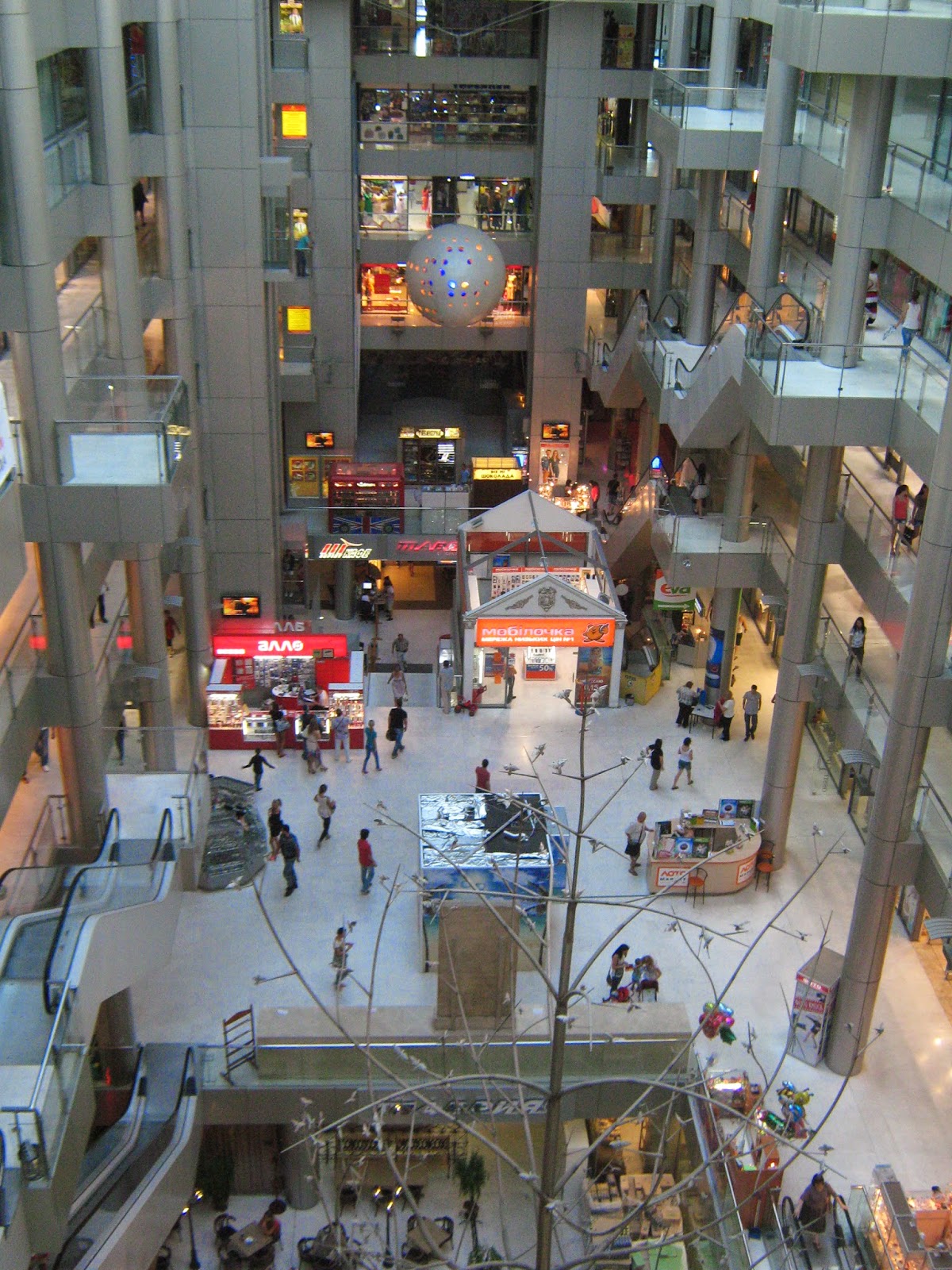
Торговый центр "Афина" расположен в самом центре города Одессы - на Греческой площади. Центр представляет собой пятиэтажное круглое здание с подземным этажом.
Вся внутренняя торговая жизнь здания проходит на виду – это объединяет всех посетителей здания и создает живую среду коммерции и отдыха. На четырех этажах торгового комплекса "Афина" расположены разнообразные бутики и магазины, где любой желающий сможет найти себе товар по вкусу. Здесь, без сомнений, даже самый искушенный покупатель будет впечатлен. В 2004 году галерея Афина была удостоена приза в номинации "Лучший архитектурный проект года".


---------------------
 The shopping center "Afina" is located in the downtown of Odessa - on Grecheskaya Square. The center represents the five-floor round building with an underground floor.All internal trade life of the building passes on a look is unites all visitors of the building and creates the live environment of commerce and rest. On four floors of a mall "Athena" various boutiques and shops where anyone will be able to find to himself goods to taste are located. Here, without doubts, even the most experienced buyer will be impressed. In 2004 the Athena gallery was awarded a prize in the nomination "The Best Architectural Project of Year".

Тц Афина Одесса \ Shopping Center Afina Odessa


Торговый центр Тц Афина расположен в самом центре города Одессы - на Греческой площади. Центр представляет собой семииэтажное круглое здание с подземным этажом. Вся внутренняя торговая жизнь здания проходит на виду – это объединяет всех посетителей здания и создает живую среду коммерции и отдыха. На четырех этажах торгового комплекса «Афина» расположены разнообразные бутики и магазины, где любой желающий сможет найти себе товар по вкусу. Здесь, без сомнений, даже самый искушенный покупатель будет впечатлен. В 2004 году галерея Афина была удостоена приза в номинации «Лучший архитектурный проект года».
   

Галерея Афина это:
  1. Возможность независимо от погоды и времени года проводить свой досуг в уютной атмосфере, совершать покупки, встречаться с друзьями в кафе…
  2. Активный живой элемент центра Одессы, дающий ему дополнительные импульсы для жизни и развития.
  3. «Продление» Дерибасовской, главной пешеходной зоны Одессы.
  4. Культурно-художественно-рекламные мероприятия, такие как показы моды, художественные инсталляции, представления.
  5. Интегрированное пространство оказания услуг посетителям.
  6. Направленность на товары среднего и высшего уровней.

-----------------------
The shopping center Shopping Center Afina is located in the downtown of Odessa - on Grecheskaya Square. The center represents the semiietazhny round building with an underground floor. All internal trade life of the building passes on a look is unites all visitors of the building and creates the live environment of commerce and rest. On four floors of a mall "Athena" various boutiques and shops where anyone will be able to find to himself goods to taste are located. Here, without doubts, even the most experienced buyer will be impressed. In 2004 the Athena gallery was awarded a prize in the nomination "The Best Architectural Project of Year".
Athena gallery it:

    Opportunity irrespective of weather and a season to spend the leisure-time in the cozy atmosphere, to make purchases, to meet friends in cafe …
    The active live element of the center of Odessa giving it additional impulses for life and development.
    "Extension" of the Deribasovsky, main pedestrian zone of Odessa.
    Cultural art publicity, such as displays of fashion, art installations, representations.
    The integrated space of rendering services to visitors.
    Orientation on goods of average and highest levels.

среда, 5 ноября 2014 г.

Одесский порт .Odessa port


Одесский морской порт — крупный торговый порт международного значения, расположен на северо-западном побережье Чёрного моря, в юго-западной части Одесского залива. Имеет один из крупнейших в Европе пассажирских терминалов. Признан базовым круизным портом Украины. Строительство порта началось в 1794 году. К 1905 году порт в основном приобрёл свои современные очертания. В Российской империи был вторым по грузообороту. Наибольший грузооборот в независимой Украине был в 2003 году — 12,4 миллиона тонн сухих грузов и 21,1 наливных. Включает в себя Каботажную, Карантинную, Практическую (она же Арбузная), Угольную (она же Военная), Новую, Нефтяную и другие гавани. В Российской империи одесский порт был вторым по грузообороту. Через Одессу экспортировалось зерно из малоросии в страны Европы и Турцию. В 1803 годы благодаря снижению таможенных пошлин грузооборот порта резко увеличивается. Объявление порто-франко (беспошлинной торговли) 1817 году еще более увеличило оборот порта, многие торговцы стали использовать порт и как перевалочный пункт для черноморской торговли.


Спустя 50 лет после основания, в 1844 грузооборот зерна одесского порта превысил грузооборот всех портов США вместе взятых. В 1841 году Николаевский (Приморский) бульвар связала с портом Гигантская (Потемкинская) лестница. В те времена, как и сейчас лестница имела более эстетическое назначение, чем практическое. Через 60 лет вдоль лестницы был протянут фуникулер, который он служил для сообщения Одессы скорее не с портом, а с жд станцией в порту. Сейчас фуникулер восстановлен, но не смотря на его бесплатность многие одесситы предпочитают лестницу из-за низкой скорости и духоты фуникулера. По одесскому порту проводятся экскурсии, а морской вокзал стал одним из прогулочных мест и своеобразной одесской набережной. На морвокзале часто приходят военные суда других держав и любой желающий может их посетить. С морского вокзала в летний сезон регулярно отходят прогулочно-экскурсионные корабли. Существует также музей одесского порта.
--------------------------
The Odessa seaport — large trade port of the international value, is located on the northwest coast of the Black Sea, in southwest part of Odessa Bay. Has one of the passenger terminals, largest in Europe. It is recognized as the basic cruise port of Ukraine. Construction of port began in 1794. By 1905 the port generally got the modern outlines. In the Russian Empire was the second for goods turnover. The greatest goods turnover in independent Ukraine was in 2003 — 12,4 million tons of dry freights and 21,1 bulk. Includes Coasting, Quarantine, Practical (it Water-melon), Coal (it Military), New, Oil and other harbors. In the Russian Empire the Odessa port was the second for goods turnover. Through Odessa grain from a malorosiya was exported to the countries of Europe and Turkey. In 1803 thanks to decrease in the customs duties goods turnover of port sharply increases. The announcement porto-free (duty-free trade) even more increased 1817 a turn of port, many dealers began to use port and as a transit point for the Black Sea trade. 50 years later after the basis, in 1844 goods turnover of grain of the Odessa port exceeded goods turnover of all ports of the USA of together taken. In 1841 Nikolayevsky Primorskiy Boulevard was connected with port by the Huge (Potemkinskaya) ladder. In those days, as well as now the ladder had more esthetic appointment, than practical. In 60 years along a ladder the funicular which it served for the message of Odessa rather not with port, and with жд station in port was stretched. Now the funicular is restored, but despite its free of charge many inhabitants of Odessa prefer a ladder because of the low speed and closeness of the funicular. On the Odessa port tours are conducted, and the marina became one of walking places and a peculiar Odessa embankment. On the morvokzal warships of other powers often come and anyone can visit them. From marina during a summer season the walking and excursion ships regularly depart. There is also a museum of the Odessa port.

Фуникулер в Одессе The funicular in Odessa


История одесского фуникулера началась на заре ХХ века. Два вагончика вместимостью 35 человек каждый, выписанные из Парижа, связали верхнюю часть города с портом. В те времена именно Одесский фуникулёр рядом с Потёмкинской лестницей стал одним из первых фуникулёров в России. Построен он был по «классической» схеме – однопутная рельсовая линия с разъездом. Движение осуществлялось по «маятниковой» схеме, когда спускающийся вагон помогал вагону, движущемуся вверх. В таком виде одесский фуникулер просуществовал 67 лет, перевозя пассажиров с бульвара в порт за неизменные 2 копейки.

История
Гигантская, ныне Потемкинская лестница, открытая в 1841 году, сначала была скорее частью архитектурного ансамбля, чем использовалась по прямому назначению. Портовый рабочий люд шел в порт на работу, в основном, со стороны Пересыпи или по спускам Военному (сейчас Жанны Лябурб), Левашовскому (затем Вакуленчука) позже Деволановскому, Польскому (Кангуна).
Со временем количество людей, желавших попасть в Одесский порт и на Приморскую улицу из центра города, возросло. Этому способствовало открытие железнодорожного сообщения из порта на Куяльницкий лиман, куда, как вспоминал в книге «Ни дня без строчки» Юрий Олеша, «шел поезд, ведомый маленьким паровозом, который назывался паровиком. Маленький, бойко свистящий паровозик, пять-шесть зеленых вагонов…» К тому же на Приморской улице вблизи порта открылось множество «заведений теплых морских ванн», упомянутых в «Записных книжках» Ильи Ильфа: «Когда все в Одессе разрушится, морские ванны по-прежнему будут сиять и переливаться светом. Одесситы любят морские ванны».
В 1880 году, учитывая конъюнктуру, была предпринята попытка создать концессию для устройства рельсового подъемного пути с пристани на бульвар, потерпевшая фиаско.
Идея эта заработала в 1895 году, когда молодой инженер Н. К. Пятницкий, выпускник Петербургского института инженеров путей сообщения, сын директора Второй одесской гимназии, подал в городскую Управу прошение о «предоставлении ему сооружения и эксплуатации механического подъемного пути с Приморской улицы на бульвар». Соблазненные предложением Пятницкого, городские власти все же объявили конкурс через местные и столичные газеты.
Откликнулась лишь одна парижская фирма, представившая только эскизный проект, никак не привязанный к местности. По заключению известного в городе инженера В. Зуева, предпочтение отдали Пятницкому.
В 1900-1902 годах спланировали склон под трассу будущего фуникулера, уложили одноколейный рельсовый путь длиной около ста метров с разъездом посередине и переходным мостиком над ним, построили деревянный ажурный павильон на бульваре, каменное здание с кассой, перроном и конторой на Приморской улице, а рядом небольшую электростанцию, собрали и закрепили на тросах два доставленных из Парижа вагончика на 35 пассажиров каждый, установили 300 калильных ламп и дуговых фонарей для освещения дороги. Работы были выполнены под руководством инженера В. Раковского.
Торжественное открытие подъёмной дороги состоялось 8 июня 1902 года. На следующий день она приняла первых пассажиров, причем, как отметил «Одесский листок», «желающих испытать удобство движения нашлось довольно много».
«Фуникулёр. Если в Одессе произнести это слово, никто не поймёт, о чем идет речь – писал Леонид Утёсов в книге «Спасибо, сердце», – его называют «подъёмная машина». Так одесситам кажется короче и понятней… Вниз почти никто не ездит. Зачем? Спуститься по лестнице просто удовольствие. Вверх тоже не очень много желающих. Подъёмная машина не «золотое дело».
По условиям контракта фуникулёр должен был перейти в собственность города в 1920 году. Революция разорвала контракт раньше. С 1919 года фуникулёр был «на консервации», то есть поломан.
Заработал он 20 сентября 1926 года, с окончанием разрухи после Гражданской войны и французской интервенции.
Во второй раз остановила фуникулёр Великая Отечественная война. Четыре года после войны не работал. В 1948 году в Одессе «начались работы по восстановлению фуникулера». Едва «отдышавшись» от войны, город восстановил фуникулер, который Валентин Катаев причислял к достопримечательностям Одессы. Через двадцать лет, в 1969 году, фуникулер закрыли. В 1970 его заменили эскалатором. Не решив при этом никакой транспортной проблемы, поскольку ее и не было.
С лица Одессы на тридцать пять лет оказалась стертой еще одна милая черта города, о которой с грустью вспоминали одесситы. В последний год существования СССР эскалатор еще работал в обе стороны. В самом начале 1990-х – уже только в одну, на подъем. Эскалатор на спуск постепенно разбирали на запчасти, и так поддерживали работу хоть в одном направлении.
Окончательно же он пришел в негодность и закрылся в 1997 году.
Современность
В 1998 году городская власть решила построить на Потемкинской лестнице новый фуникулёр по принципу наклонных лифтов и выделила деньги. Получился долгострой длиной в восемь лет. И в 2005 году Одесский фуникулер заработал снова.
Торжественное открытие возрожденного фуникулера на два вагончика по десять человеко-мест состоялось 2 сентября 2005 года в двести одиннадцатый день рождения Одессы.
----------------------
The history of the Odessa funicular began at the beginning of the XX century. Two cars with a capacity of 35 people everyone which are written out from Paris connected the top part of the city with port. In those days Odessa funicular near the Potyomkinsky ladder became one of the first funiculars in Russia. It was constructed according to the "classical" scheme – the single-line rail line with travel. The movement was carried out according to the "pendular" scheme when the going-down car helped the car moving up. In such look the Odessa funicular existed 67 years, transporting passengers from the boulevard to the port for invariable 2 kopeks.

History
The huge, nowadays Potemkinsky ladder opened in 1841 at first was rather a part of an architectural complex, than was used directly. The port working people went to the port to work, generally from Peresypi or on descents to the Military (now Zhanna Lyaburb), to Levashovsky (then Vakulenchuka) later Devolanovsky, Polish (Kanguna).
Over time the number of the people wishing to get to the Odessa port and on Primorskaya Street from the downtown increased. It was promoted by opening of railway communication from port on the Kuyalnitsky estuary where as Yury Olesha remembered in the book "Not a day without a line", "there was a train conducted by the small engine which was called as a boiler. The small, quickly whistling engine, five-six green cars …" Besides on Primorskaya Street near port the set of "institutions of the heat sea baths" mentioned in "Notebooks" of Ilya Ilf opened: "When everything in Odessa will collapse, sea bathtubs will still shine and be poured by light. Inhabitants of Odessa love sea bathtubs".
In 1880, considering an environment, an attempt to create concession for the device of a railway lifting line from pier on the boulevard, come to grief was made.
This idea earned in 1895 when the young engineer N. K. Pyatnitsky, the graduate of the Petersburg institute of engineers of means of communication, the son of the director of the Second Odessa gymnasium, submitted to town council the application about "granting to it a construction and operation of a mechanical lifting way from Primorskaya Street on the boulevard". The tempted with Pyatnitsky's proposal, city authorities nevertheless announced competition through local and capital newspapers.
 Only one Parisian firm which submitted only the outline sketch which isn't attached to the district responded. According to the conclusion of the engineer V. Zuyev, famous in the city, the preference was given to Pyatnitsky.

In 1900-1902 planned a slope under the route of future funicular, laid a single-track railway line about hundred meters long with travel in the middle and the transitional bridge over it, constructed wooden openwork pavilion in the boulevard, the stone building with cash desk, the platform and office on Primorskaya Street, and nearby small power plant, collected and fixed on cables two cars delivered from Paris to 35 passengers everyone, established 300 kalilnykh of lamps and arc lamps for lighting of the road. Works were performed under the leadership of the engineer V. Rakovsky.

The ceremonial opening of the lifting road took place on June 8, 1902. Next day it accepted the first passengers, and as noted "The Odessa leaf", "persons interested to test convenience of the movement was very much".
"Funicular. If in Odessa to say this word, nobody will understand about what there is a speech – Leonid Utyosov in the book "Thanks, Heart" wrote, – it call "hoist engine". So it seems to inhabitants of Odessa well and more clearly … Down almost nobody goes. What for? the pleasure is simply to Come downstairs. Up too not really there are a lot of persons interested. Hoist engine not "gold business".
Under the terms of the contract the funicular had to pass into city property in 1920. Revolution broke off the contract earlier. Since 1919 the funicular was "on preservation", that is is broken.
He earned on September 20, 1926, with the termination of ruin after Civil war and the French intervention.
For the second time the Great Patriotic War stopped the funicular. Four years after war I didn't work. In 1948 in Odessa "works on restoration of the funicular began". "Having hardly recovered the breath" from war, the city restored the funicular which Valentin Katayev ranked as sights of Odessa. In twenty years, in 1969, the funicular was closed. In 1970 it was replaced with the escalator. Without having solved thus any transport problem as it was also not.
From the face of Odessa for thirty five years it was erased one more lovely city boundaries which with grief inhabitants of Odessa remembered. In the last year existence of the USSR the escalator still worked in both parties. At the very beginning of the 1990th – already only in one, on rise. The escalator on descent gradually was disassembled on the spare part, and so supported work though in one direction.
Finally it became useless and was closed in 1997.

Present
In 1998 the city authority decided to construct on the Potemkinsky ladder the new funicular by the principle of inclined elevators and allocated money. Unfinished construction of eight years turned out. And in 2005 the Odessa funicular earned again.
The ceremonial opening of the revived funicular on two cars on ten cheloveko-places took place on September 2, 2005 at the two hundred eleventh birthday of Odessa.

Одесский Кафедральный Спасо-Преображенский собор Cathedral Transfiguration Cathedral


В августе 1794 года, во время торжественного освящения Одессы, на главной городской площади (Соборная площадь) лично митрополитом Гавриилом было освящено место строительства церкви в честь Николая Чудотворца, а через год заложен первый камень. Построенная вскоре (в 1804 году) Спасо-Преображенская церковь и стала прародительницей будущего кафедрального собора.  Одесский Кафедральный Спасо-Преображенский собор В 1908 году православные христиане широко отметили столетие Спасо-Преображенского кафедрального собора - одного из крупнейших соборов России. Никто тогда и предположить не мог, что через девять лет начнется другое времяисчисление: после прихода к власти большевиков были изъяты церковные ценности, а в мае 1937 року храм был взорван. Останки бывших архиепископов, покоившиеся в боковых пределах храма по ходатайству церковных органов перевезли на Слободское кладбище. Там они пролежали до недавнего времени, пока несколько лет назад не были перезахоронены на кладбище Свято-Успенского мужского монастыря. Над телами же губернатора Новороссийского края графа Воронцова и его супруги, покоившихся тут же, надругались и сбросили в ров у стены городского кладбища. Останки почитаемых граждан Одессы были тайно захоронены.


    После принятия в 1999 году постановления Кабинета Министров Украины, включающего Одесский Спасо-Преображенский собор в Программу восстановления выдающихся утраченных памятников истории и культуры Украины, собор начинают восстанавливать, и на Рождество Христово 2001 года состоялось торжественное открытие колокольни    2 сентября 2004 года провели торжественное открытие мозаичной иконы Христа Вседержителя на Престоле на восточном фасаде собора и открыли Филатовский фонтан на Соборной площади. Через год состоялось освящение нижнего храма Одесского Спасо-Преображенского Собора в честь святителя Иннокентия Одесского чудотворца. В этом же году останки супругов Воронцовых были перенесены в собор. На перезахоронение, в мельчайших деталях повторяющее похороны графа (шествие проследовало от дворца губернатора до собора), собралось около десяти тысяч одесситов, желающих выразить почтение генерал-губернатору, сделавшему много добрых дел на благо и во славу города. Огромное внимание вызвало у православных одесситов и другое важное в жизни Спасо-Преображенского собора событие: 7 июля 2007 года в его нижний храм были перезахоронены честные мощи святителя Иннокентия Одесского.
------------------------
In August, 1794, during solemn consecration of Odessa, on the main city square (Cathedral square) personally the metropolitan Gabriel consecrated a site of church in honor of Nicholas The Wonderworker, and in a year the first stone is put. Constructed soon (in 1804) Church of the Transfiguration also became the progenitress of future cathedral. The Odessa Cathedral Transfiguration Cathedral In 1908 orthodox Christians widely noted century of Spaso-Transfiguration Cathedral - one of the largest cathedrals of Russia. Anybody then couldn't assume that in nine years other calendar will begin: after coming to power of Bolsheviks church values were withdrawn, and in May, 1937 to fate the temple was blown up. The remains of the former archbishops which were based in lateral limits of the temple according to the petition of church bodies transported on the Suburban cemetery. There they lay until recently while a few years ago weren't reburied on a cemetery of the Sacred and Uspensky man's monastery. Over bodies of the governor of the Novorossiysk region the column of Vorontsov and his spouse, being based right there, outraged and dumped in a ditch at a wall of a city cemetery. Remains of the esteemed citizens of Odessa were secretly buried.
    After acceptance in 1999 resolutions of the Cabinet of Ukraine including the Odessa Transfiguration Cathedral in the Program of restoration of the outstanding lost historical and cultural monuments of Ukraine start restoring a cathedral, and for Christmas of 2001 the ceremonial opening of a belltower took place on September 2, 2004 held a ceremonial opening of a mosaic icon of Christ Vsederzhitel on the Throne on east facade of a cathedral and opened the Filatovsky fountain on the Cathedral square. In a year consecration of the lower temple of the Odessa Transfiguration Cathedral in honor of the prelate Innokenti of the Odessa wonder-worker took place. Same year remains of spouses Vorontsov were transferred to a cathedral. On the reburial in the smallest details repeating the count's funeral (procession proceeded from the palace of the governor to a cathedral), about ten thousand inhabitants of Odessa wishing to express respect to the governor general who made many good deeds for the benefit and in glory of the city gathered. The huge attention caused in orthodox inhabitants of Odessa and another an important event in Transfiguration Cathedral life: On July 7, 2007 to its lower temple honest relics of the prelate Innokenti Odessky were reburied.

вторник, 4 ноября 2014 г.

ТРЦ Dream Town .Киев. Dream Town/ Kyiv


Торгово-развлекательный центр Dream Town состоит из двух блоков: блок 1 расположен между станциями метро «Оболонь» и «Минская», блок 2 расположен между станциями метро « Минская» и «Героев Днепра». Между собой они соединены подземной галереей, имеющей выход к станции метро «Минская».
Каждая из частей торгово-развлекательного центра имеет свое тематическое направление. Блок1 радует посетителей модными товарами и развлечениями. Магазины и универмаги одежды, обуви, аксессуаров расположены на первых двух уровнях. На третьем уровне находятся: каток, керлинг, боулинг, ролледром, детский развлекательный центр, кинотеатр, фуд-корт, а также многочисленные рестораны с летними площадками и кафе.
Блок 2 предоставляет максимальный выбор мебели и товаров для дома: мягкая и корпусная мебель, сантехника, злектроника и бытовая техника, светильники, обои, ковры и множество других вещей, которые помогут обеспечить уют и комфорт в доме. В этом же блоке посетители смогут найти товары для активного отдыха и спорта, а также товары для детей. Также этот блок включает гипермаркет.
Практически каждая зона Dream Town оформлена в своем уникальном стиле. Это оформление под разные страны мира. Кроме этого в Dream Town находится уникальный по своему оформлению аквапарк Юрского периода.
---------------------------


The Dream Town shopping center consists of two blocks: the block 1 is located between Obolon and Minskaya metro stations, the block 2 is located between Minskaya metro stations and "Heroes of Dnieper". Among themselves they are connected by the adit having an exit to Minskaya metro station.

Each of parts of shopping center has the thematic direction. Blok1 pleases visitors with fashionable goods and entertainments. Shops and department stores of clothes, footwear, accessories are located at the first two levels. At the third level are: a skating rink, curling, bowling, a rollerdrome, children's entertainment center, movie theater, a food court, and also numerous restaurants with summer platforms and cafe.

The block 2 provides the maximum choice of furniture and goods for the house: upholstered and cabinet furniture, bathroom equipment, a zlektronik and household appliances, lamps, wall-paper, carpets and a set of other things which will help to provide a cosiness and comfort in the house. Visitors will be able to find goods for active recreation and sport in the same block, and also goods for children. Also this block includes hypermarket.

Practically each zone Dream Town is issued in the unique style. This registration under the different countries of the world. Besides in Dream Town there is an aquapark of the Jurassic Period, unique on the registration.


Киев со смотровой площадки Андреевского собора.Kiev from an observation deck


Издавна хорошим пунктом обозрения было место возле Андреевской церкви. Андреевская церковь была построена в 1744 году. Что бы попасть на смотровую, нужно обойти здание с тыльной стороны. Хоть обзор тут не очень широкий, но зато это место  очень тихое и  уютное и с него тоже открываются красивые виды.
Андреевская церковь Место, на котором сейчас расположена Андреевская церковь, издавна славилось хорошим обзором. Когда-то здесь стоял терем княгини Ольги и изваяние языческого Перуна. В 40-е годы от Рождества Христова святой апостол Андрей установил на холме крест, который в 988 году заменила церковь Св. Василия, а затем Андреевский женский монастырь. Андреевская церковь появилась в 1744 году по проекту Франческо Бартоломео Растрелли в связи с приездом Елизаветы I в Киев. Выполненная в стиле барокко церковь окружена балюстрадой. Если обойти по ней здание с тыльной стороны, попадаешь на небольшую смотровую площадку. В будние дни, и особенно сейчас, когда начинает подмораживать, созерцать киевские виды в одиночестве никто не помешает. Обзор не широкий, но симпатичный: приднепровская часть Подола, Днепр и Троещина на горизонте.


--------------------------
Long since the place near Andreevsky church was good point of a review. The Andreevsky church was constructed in 1744. What to get on viewing, it is necessary to bypass the building from the back. Though the review here not really wide, but this place very silent and cozy and from it beautiful types too open.

The Andreevsky Place church on which the Andreevsky church is now located, long since was famous for the good review. Once there was a tower of the princess Olga and pagan Perun's sculpture. In the 40th years A.D. the Saint apostle Andrey established a cross which in 988 was replaced by St. Vasily's church, and then Andreevsky convent on the hill. The Andreevsky church appeared in 1744 on Francesco Bartolomeo Rastrelli's project in connection with Elizabeth I's arrival to Kiev. The church executed in Baroque style is surrounded with a balustrade. If to bypass on it the building from the back, you get on a small observation deck. On weekdays, and especially now when starts freezing, beholding the Kiev types alone nobody will prevent. Review not wide, but nice: the Dnieper part of the Hem, Dnieper and Troyeshchina on the horizon.